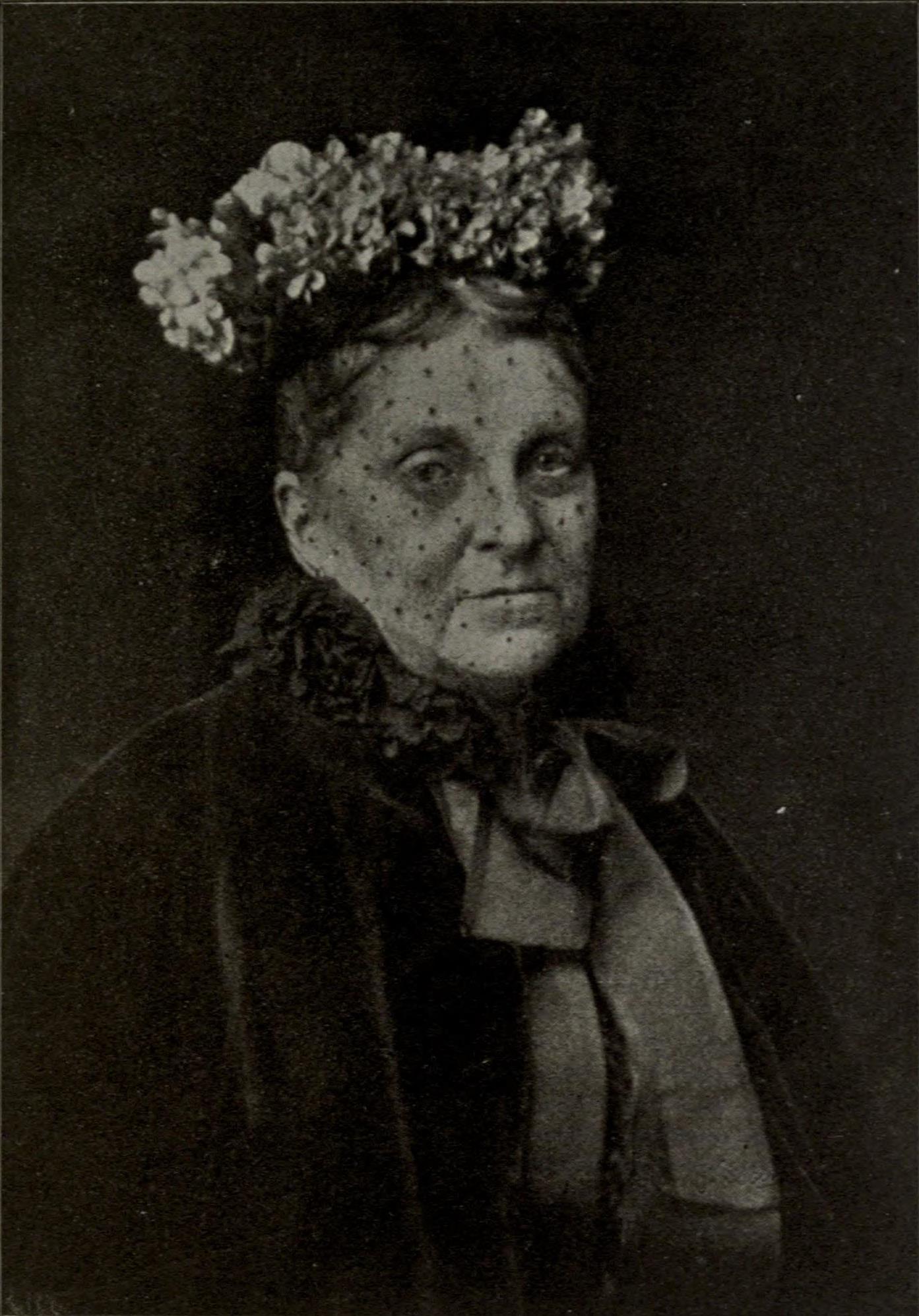
PROFILE
Hetty Green
The Only Buyer Left
Financier · 1834 – 1916
The Only Buyer Left: Hetty Green and the Panic of 1907
In October of nineteen oh seven, the City of New York ran out of money.
Not metaphorically. The banks were failing, credit had stopped moving, and the city could not sell its own paper — the short-term IOUs a government issues to cover its bills until the tax money comes in. New York was not broke. Its tax base was fine. It simply could not turn a future certainty into cash today, because every institution that normally does that job was busy trying to survive the week.
There was one buyer left in the city with money to spend.
She was seventy-two years old, she was wearing a black dress that the newspapers had been mocking for thirty years, and she wrote a check for one point one million dollars.
She charged six percent.
She said afterward that she could just as easily have charged forty.
Understand what that sentence is. It is not modesty. It is a woman standing in the middle of a financial panic, with a city over a barrel, announcing in public exactly how badly she could have hurt them and exactly how much she declined to. Every man in that market would have taken the forty. She priced it at six and then said so out loud, which is worse for them, because now it is on the record what the alternative was.
They called her the Witch of Wall Street.
Here is what she actually did, because the mechanics are the whole point.
What she bought that day was a revenue bond. A revenue bond is a loan to a government repaid out of one identified stream of money — taxes, tolls, water bills. Not a general promise to pay someday. A specific pipe with money coming through it. When you buy one, you are not betting on the city's character. You are betting on whether people keep paying their taxes.
She decided they would. She was right.
But the reason she could make that bet at all is the part nobody wrote a headline about. For years before the panic, she had been selling property and sitting on the proceeds in cash and short-term paper, while everyone around her bought on credit. Her peers called it miserliness. It was a position. Holding money in a form you can spend immediately costs you return in every good year, and it pays you the entire market in the one bad one.
She had also spent forty years lending against collateral — meaning the borrower pledges something the lender can seize if the loan goes wrong. She priced the thing pledged, never the person pledging it. So when the borrower turned out to be the City of New York, and the collateral turned out to be New York's tax revenue, the loan was, by her arithmetic, close to free money.
She was born Henrietta Howland Robinson, in New Bedford, Massachusetts, in eighteen thirty-four, into whaling money. By the family's account she was reading the financial pages aloud to her grandfather before she was ten years old.
Her father died in the mid eighteen sixties and left her several million dollars. Her aunt died around the same time, and Green produced a will with a clause sending the aunt's fortune to her as well. The family contested it. The case went to trial, a Harvard mathematician examined the signature and testified, using probability, that it had been traced.
She lost.
So there she is. Early thirties. Rich. Just publicly accused in open court of forging a dead woman's signature.
She went to work the next day and never stopped.
In eighteen sixty-seven she married Edward Henry Green, a wealthy man, and before the wedding she made him sign a document renouncing every claim to her money.
Consider the year. Under the law of that period, a wife's property generally became her husband's the moment she married him. Not by agreement. Automatically. The legal machinery of the entire country was arranged to take her fortune and hand it to him, and she looked at that machinery and wrote her way around it in advance, with a contract, before she would say yes.
It is the single most modern act in this story and it happens in eighteen sixty-seven.
He later went speculating and lost most of his own money.
She did not cover his losses.
They separated.
Her method was three sentences long. Buy what nobody wants. Hold it until somebody wants it. Never pay for the same thing twice.
She bought government bonds during the Civil War, when the currency was distrusted and the paper traded far below face value. She bought railroad bonds out of bankruptcies. She bought Chicago real estate and sat on it for years while people told her it was dead money. She lent to people and to cities that had run out of options, and she took security every single time.
She kept no office. She worked from a desk in the lobby of the Chemical National Bank, where her accounts were, because a desk in a lobby is free and an office is not. She lived in cheap boarding houses in Hoboken and in Brooklyn, partly so she would never establish residency in New York City and never owe it the tax.
The richest woman in the world, running a nine-figure balance sheet, out of a chair in somebody else's lobby, deliberately.
The press could not stand her. They ran the black dress. They ran the boarding houses. The Guinness Book of World Records eventually named her the world's greatest miser, which is a distinction that only ever seems to get handed to women who decline to spend money on being liked.
Not all of it was invented. Her son Ned had a leg amputated in eighteen eighty-seven, and the story that has trailed her ever since is that she dragged him around free clinics until the injury turned. The actual record is messier than the legend. He blamed a handcar accident. She took him to a series of doctors. But the story is the one that stuck, because it was the story people wanted about a woman who would not perform generosity on cue.
She died on the third of July, nineteen sixteen, worth somewhere near one hundred million dollars. Call it more than two billion in today's money. She was the richest woman in the world and she had never held a title at any institution anywhere, because no institution would have given her one.
The estate split between her two children. Ned spent his half with enthusiasm, on yachts and rare stamps. Her daughter Sylvia spent almost none of hers, and when Sylvia died in nineteen fifty-one, the great majority of it went to hospitals and colleges and charities.
The woman the newspapers spent forty years calling a miser financed one of the larger charitable transfers of the century. It took two generations, and she was not around to be thanked, and she would not have cared.
Here is the assessment.
Hetty Green was not a great investor because she was frugal. Frugality was a personality trait, and the press was welcome to it. Plenty of frugal people die with nothing.
She was great because she understood one thing about cash that almost nobody learns. The value of cash is not what it earns. Cash earns you close to nothing, and in most years that is exactly what it looks like it is doing — a drag, a mistake, money sitting still while everyone around you is compounding.
The value of cash is what it can buy in the year nobody else has any.
She held it through every year that made her look foolish so she would have it in the year that made her indispensable. And when that year came, she lent to a failing city at six percent, in the open, during a panic, and then told everyone what she could have charged instead.
She lent at six when she could have taken forty.
They called her a witch for a hundred years.